Split costs,
not friendships.
A mobile app (PWA) for splitting shared household expenses. Add a receipt in three taps — it keeps track of balances and tells you who owes whom. At the end of the period you settle up with the fewest possible transfers.
A shared home means shared expenses — and a constant “who paid last time?”.
Revolut Groups does it sluggishly and with no analytics at all. Splitka was meant to be faster, to the point, and to work everything out by itself — no AI, no third-party cloud, on my own server. The whole idea is one loop you can go through in a few seconds:
Five screens, one loop.
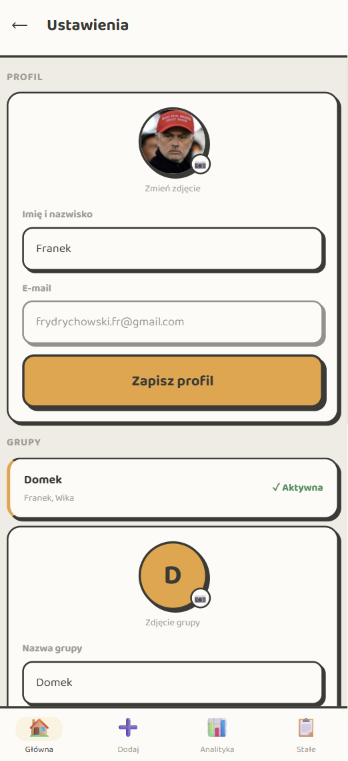
Mobile-first, but on desktop it expands into a full layout with side navigation. Below are real screenshots from production.
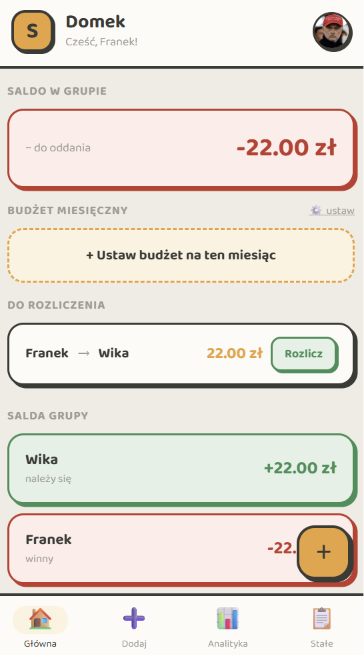
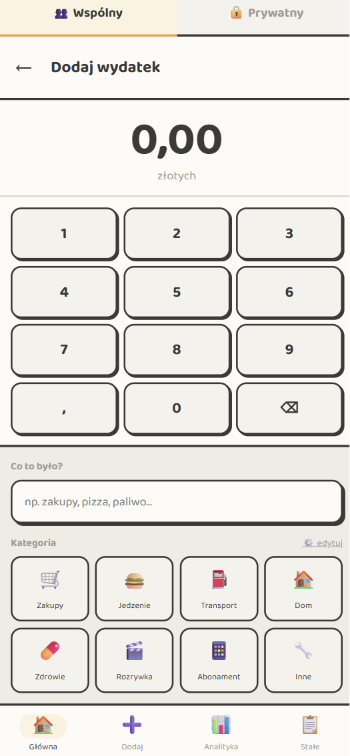
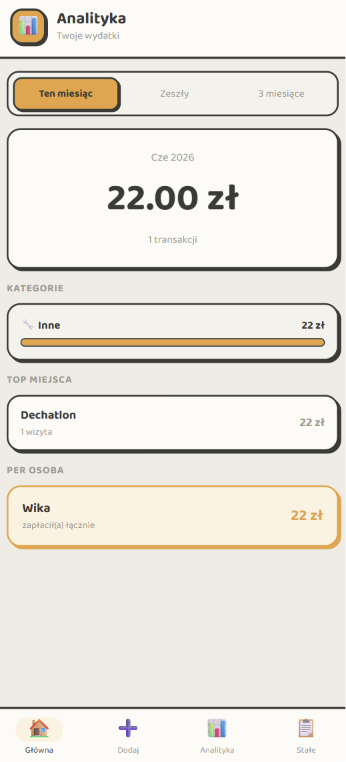
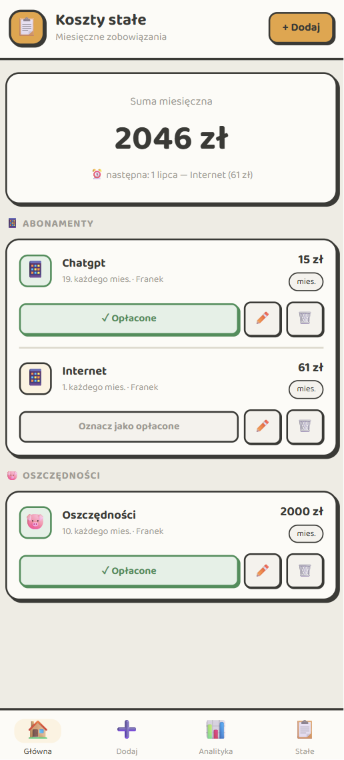
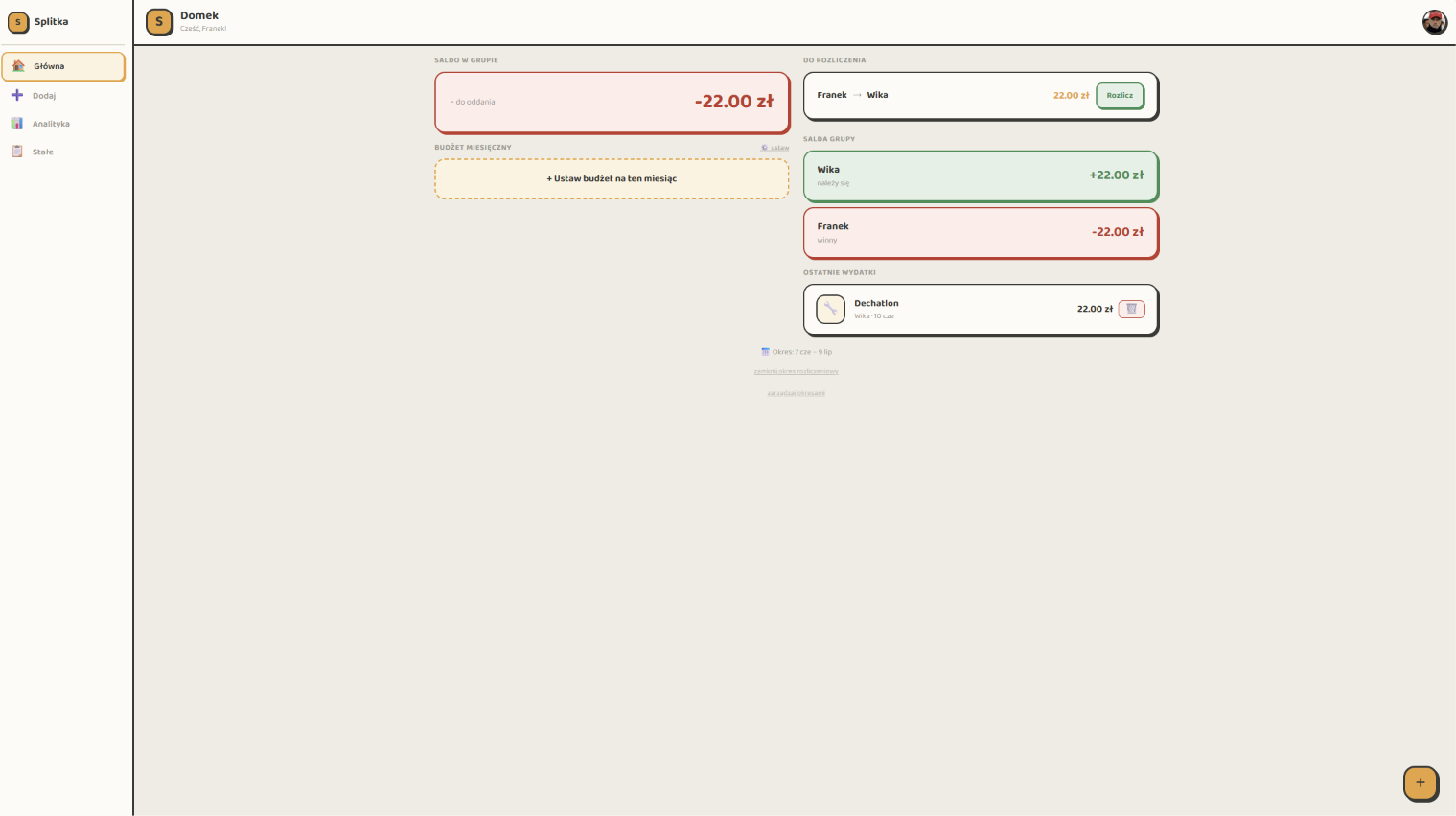
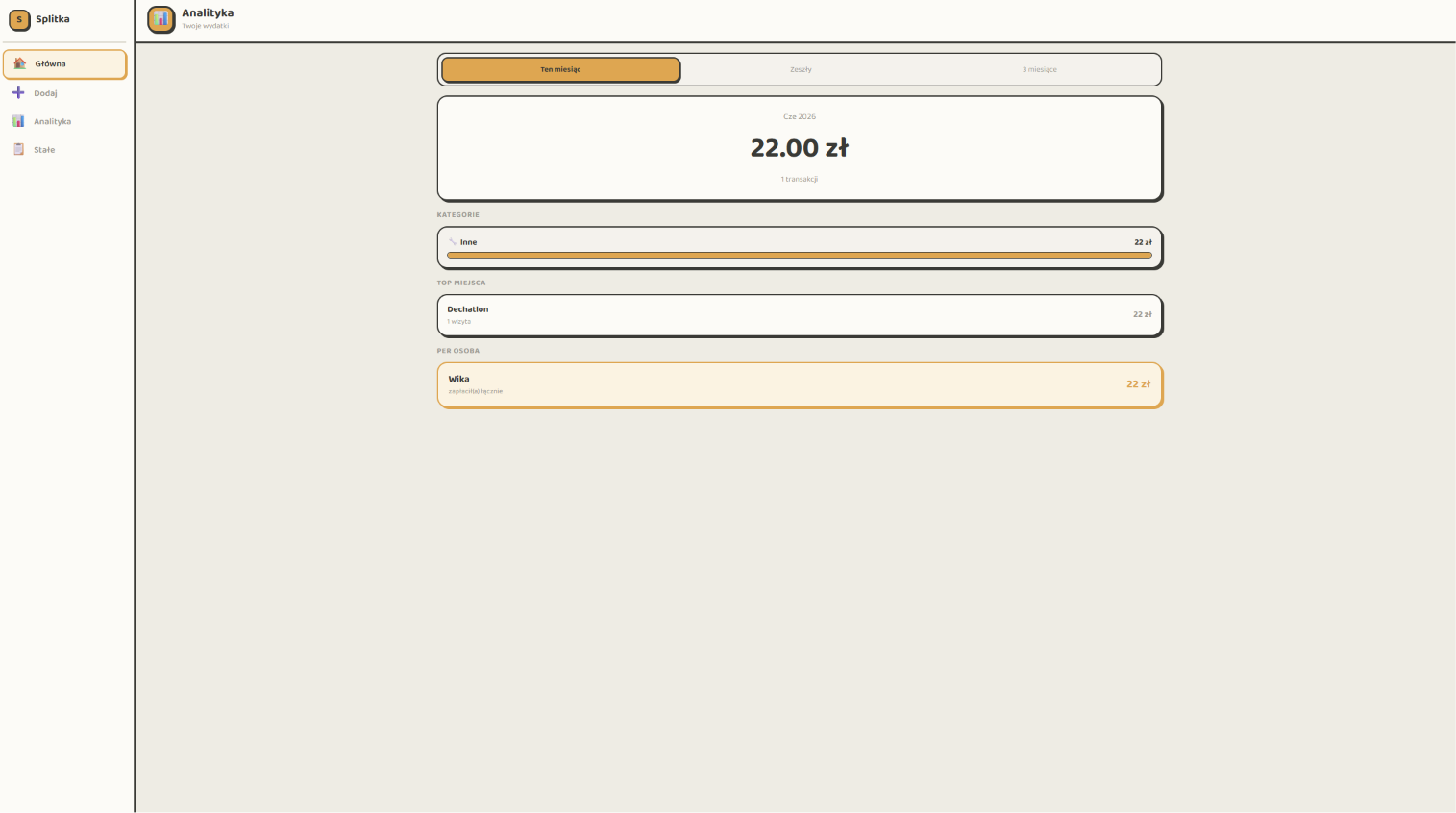
Same product, full layout.
The app isn’t just “a phone in the middle of the screen”. Above 1024 px it switches to side navigation, a two-column dashboard and larger type — a dedicated view, not a stretched mock-up.
A simple stack that doesn’t need babysitting.
The whole architectural idea: as few moving parts as possible. A static frontend, a single-binary backend, one database file — and a server for four and a half euros a month.
Frontend
SvelteKit in adapter-static mode — the whole app is just plain files, with no server behind it. It loads instantly, and you install it from the browser via “Add to Home Screen”, where it works like a native app.
SvelteKit · PWABackend
PocketBase — one small Go program that gives you login, an API, real-time and an admin panel out of the box. Light and self-contained, with no stitching together of five cloud services.
PocketBase · self-hostedDatabase
SQLite under PocketBase. For 2–10 household members it’s more than enough, and a backup is just copying one file. Eight collections: groups, expenses, periods, settlements, fixed costs…
SQLite · 8 collectionsHosting
My own server for a few euros a month. Traffic goes through a reverse proxy with an HTTPS certificate, and the service restarts itself after every reboot. Full control, no third-party cloud.
Own VPS · HTTPSFour decisions that shaped the project.
No App Store, no reviews, no waiting for approval. You send a link, tap “Add to Home Screen” — done. Updates arrive automatically the next time you open it.
Self-hosted, so the data lives on my server, not with Google. Auth, API and real-time all included — no stitching together of five cloud services.
Settling debts is pure maths, not a job for a model. Speed and predictability matter more here than trendy gimmicks — the app calculates instantly and always the same way.
The simplest tool, and more than enough for a few people. No separate database server, no configuration, backup in a single file.